Saturday, 25 September 2010

Gabrielle Childe (nee Greenwood) shares her "Campaign to keep MHH Open" document

The Campaign to keep the Marguerite Hepton Orthopaedic Hospital Open

The photos and text printed here are from the original album compiled by Gabrielle Childe with the help of trade unionists Mike Harwood and Stuart Roden taken to The Ministry of Health in 1984

THE TRADE UNIONS OPPOSE THE TRANSFER OF ORTHOPAEDIC PATIENTS AT THE PRESENT TIME FOR THE FOLLOWING REASONS.

a) That it takes no account of the effect on services to Leeds Western Health Authority patients.

b) That it makes less likely the rationalisation of orthopaedic services on an area wide basis, particularly the establishment on an elective orthopaedic unit, which the Trade Unions would see as an ideal option.

THE TRADE UNIONS OPPOSE THE CLOSURE AND SUBSEQUENT DISPOSAL OF THE SITE FOR THE FOLLOWING GROUNDS;

a) That it is against the policy of the present government as outlined in the booklet ‘Care in Action’.

b) That it is against the best interests of the people in Leeds to dispose of health care facilities, when there is an acknowledged shortage of health service beds and increasing waiting lists.

THE TRADE UNIONS ACKNOWLEDGE THAT IF AN ELECTIVE ORTHOPAEDIC UNIT IS ESTABLISHED ON AN AREA BASIS, IT MAY BE AT SOME POINT IN TIME BE NECESSARY TO MOVE ORTHOPAEDIC PATIENTS FROM THE MARGUERITE HEPTON TO ANOTHER SITE IN THE LEEDS AREA. IN THAT EVENT WE PROPOSE THE FOLLOWING USES FOR THE HOSPITAL AND POSSIBLE SUGGESTIONS ON FINANCE;

a) That finance for the hospital could be achieved through a combination of existing monies and joint financing with the Local Authority.

b) That the hospital be used for ‘community purposes’. This to cover a wide range of services including the continuation of outpatient facilities.

c) That the Marguerite Hepton Hospital could be used for psycho – geriatric or geriatric services.

d) That the hospital could be used for convalescent purposes. These would be available on a district or city wide basis.


THE DRIVE, CAR PARK AND RECREATION ROOMS


THE EXISTING STOCK OF HEALTH SERVICE BUILDINGS IS A NATIONAL RESOURCE WHICH SHOULD BE KEPT IN GOOD CONDITION AND ADAPTED TO PRESENT DAY NEEDS.


WARD 2


THE ADMINISTRATION UNIT


THE EXISTING STOCK OF HEALTH SERVICE BUILDINGS IS A NATIONAL RESOURCE WHICH SHOULD BE KEPT IN GOOD CONDITION AND ADAPTED TO PRESENT DAY NEEDS.

EXPERIENCE HAS SHOWN THAT THE USEFUL LIFE OF MANY OLD BUILDINGS CAN BE LENGTHENED BY UPGRADING AND EXTENSION.


THE GOVERNMENT FAVOURS SMALL LOCAL HOSPITALS SUPPORTING THE LARGE DISTRICT HOSPITALS.


NURSES HOME AND MAIN BLOCK


IT IS MISLEADING TO REFER TO THE “ALTERNATIVE USE” OF THE MARGUERITE HEPTON HOSPITAL AS A COMMUNITY HOSPITAL. IT IS ALREADY IN PART FUNCTIONING AS A COMMUNITY HOSPITAL. IT PROVIDES PHYSIOTHERAPY, HYDROTHERAPY AND X – RAY SERVICES TO THE LOCAL COMMUNITY. THOUGHT SHOULD BE GIVEN TO WHAT IS ALREADY THERE UNTIL IT CAN BE FURTHER DEVELOPED.

a) Consulting rooms

b) Central office

c) Nurse’s Home

d) Operating Theatre

e) X – ray department (plus modern dark room)

f) Physiotherapy Department ( including hydrotherapy pool )

g) Three wards ( with doors directly outside to the gardens)

h) Occupational Therapy Department.

i) Dining and Canteen facilities

j) Modern Hospital Kitchen

k) Four semi detached houses

l) 24 acres of agricultural land

m) Daily visit by local GP and twenty four hours ‘on call’ duty cover

n) N Weekly visit by two consultants.

There can be no uniform pattern for a community hospital. Each must be designed to the needs of the locality; there might be an emphasis on geriatric care and rehabilitation but no need for a minor casualty unit. Alternatively, a market town might need ‘intermediate ‘casualty and minor surgical facilities.


WARD 2 AND 3 PATIO AND GARDEN


The Marguerite Hepton Hospital is well maintained and is one of the most economically run hospitals in the Leeds Eastern District.


PHYSIOTHERAPY AND HYDROTHERAPY UNIT


RECENTLY BUILT BOILER HOUSE


“EVERY DISTRICT SHOULD PROVIDE ENOUGH SUITABLE ACCOMMODATION FOR THE CARE OF THE ELDERLY PEOPLE ESPECIALLY THE MOST VULNERABLE AND FRAIL.”

The number of people over seventy – five is increasing and those who need care have often been provided with unacceptably low standards of service, particularly in some aspects of long term care.

Health Authorities must make long term plans for health care in their district, with particular emphasis placed on care of the elderly. Whilst it is preferable to provide new purpose built accommodation for health care, the government recommend that existing health buildings be adapted to present day needs.

The Marguerite Hepton Orthopaedic Hospital is already partly serving the community and would need very little adaptation for use of the wards by Social Services.


THE MARGUERITE HEPTON HOSPITAL AS A PRE – CONVALESCENT AND/OR CONVALESCENT HOSPITAL

The object of convalescence is to provide a suitable environment in which the remedy effected by acute medicine and surgery can me completed and a transfer back to independence in the community assisted. This is an essential separate function of the health service which should be preserved.

The best place to convalesce is obviously at home, however, this can only be so if there is a satisfactory home environment in terms of comfort, physical facilities and supportive care. At the present time there are patients who are discharged prematurely due to the urgent need for an acute bed and before the medical social workers have investigated their home circumstances thoroughly. These investigations can take several weeks to complete, particularly with regard to the elderly, who often need a great deal of supportive care. This results in a patient being in an acute bed which would otherwise would have been used to reduce the waiting list for surgery.

It often takes several weeks to discharge a patient home from an acute ward because of circumstances, particularly where the severely disabled and the elderly are concerned.

Unhappily, there are some patients who cannot return home and have to wait for vacancies to occur, e.g. Part III accommodation or disabled person’s home.

The Marguerite Hepton Hospital could be ideally used for this purpose and on a more economical basis that a large technology hospital.


WARD 1 PATIO AND GARDEN


The Leeds Eastern Community Health Council stated at a Public Meeting that not only did they oppose the closure of The Marguerite Hepton Hospital but they felt that at an appropriate time when resources were made available the hospital should expand the services it already provides.

According to D.H.S.S. guidelines the district is already 30 beds short of its norm. If the Marguerite Hepton Hospital should close that would make a total of 77 beds as a shortfall for orthopaedics.

So far as ordinary x – rays are concerned it should be recognised that many patients are compelled to travel for long distances for an examination that could be easily and economically; for those and the state to be treated locally.


OUTDOOR RECREATION AREA


THE CHAPEL


The Marguerite Hepton Hospital has always had excellent local voluntary support. It has not only provided the hospital with comforts for the patients, but the local people have been willing to visit patients.


PHYSIOTHERAPY DEPARTMENT


HYDROTHERAPY UNIT


WAITING LISTS


LEEDS WESTERN HEALTH AUTHORITY

The percentage of elective orthopaedic cases represents only 15% of total cases. The current waiting list, gained from the authorities own documents is 476 patients. (Effectively a seven year waiting list)

“We repeat that there are patients on this large waiting list who have waited seven years and anyone with a non – urgent remedial condition would face the likelihood of a delay of this order”. In agreement were;

E. B.Longton F.R.C.S F.F.Silk F.R.C.S

M.A.Nelson F.R.C.S M.J.Abberton F.R.C.S

LEEDS EASTERN HEALTH AUTHORITY

In the Eastern Health Authority the position regarding waiting lists is even worse. The figures obtained from the authority as at 31st October 1983 are 701 patients on the waiting list and 115 on the day ward list. That represents a total waiting list across the city of approximately 1300 patients in need of orthopaedic surgery.

1982 Pay and Prices

Cost per patient per day

St James University Hospital……………………………………….£67.31p

Marguerite Hepton Hospital……………………………………… £4o.98p

These figures were the latest available from the Leeds Eastern Health Authority on 12.6.84
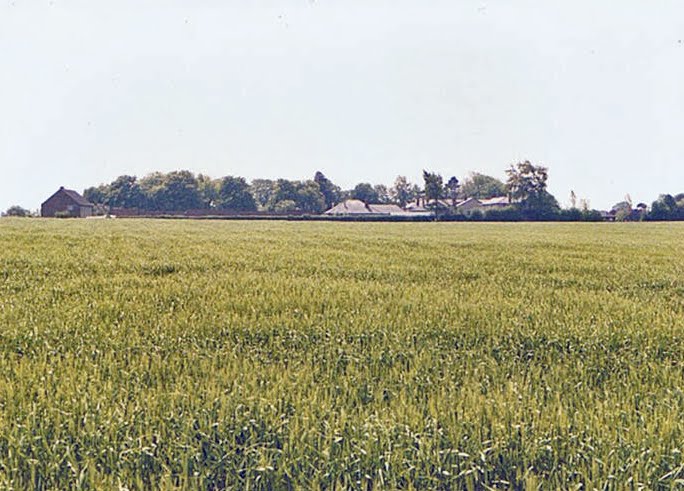

HOSPITAL AND ARABLE LAND OWNED BY NHS


This land is held by a farmer under a tenancy protected under the Agricultural Holdings Act 1948. It has been farmed by his family for over 30 years and he has no intention of willingly giving up possession. Apart from bad husbandry by the farmer, the only grounds on which he could be compulsorily be deprived of his tenancy would be id there was planning permission for development. Development of the land is not likely to be allowed. The Wetherby District Plan states:

“It is considered that this area of land should remain as open countryside in predominantly agricultural use and that development should normally be restricted to that appropriate to a rural area. As no expansion of Walton (adjacent village) into the countryside can be justified at present, the boundary to the rural land has been drawn closely round the village”.

NB
The Marguerite Hepton Hospital closed in September 1985 following a hard fought battle.
It became a nursing home for a comparatively short time before it was completely demolished to make way for a housing development.

Not even a memorial plaque to say it was there. Thankfully the trees on the drive remain, which enables me to say to my grandchildren “ See that third tree on the left? That is where the granddad you never met asked me to marry him.” The buildings may have been taken away but memories linger on.

Friday, 24 September 2010

Terry Swift makes the news in Castleford


Today I had a Google Alert telling of Terry Swift's stay in MHH together with a very familiar looking photo. The alert took me to The Pontefract & Castleford Express Newspaper article called Wartime Hospital Experiences where Terry tells of his time in MHH ranging from 1944 to 1947. I have since been in contact with Terry who tells me he is happy for me to add this posting. He suffered from Perthes disease and was 8 years old when he was admitted to the hospital.

His photo has an X marking his position in the group of patients, this oddly enough is the same picture we received from Robin Watson in March 2009 (see below) minus the X. Robin was not entirely sure of the photo's origin and neither is Terry but he thought it might have been taken by his grandfather, a keen photographer, nor does he remember who was responsible for the X being inked in. He was able to uncover one small mystery and that is the identity of the chap standing by the bed using crutches. He is also a patient, around 16 at the time, named Harry Batt, one of the few able to walk around. He can also recall the names of other patients, Roy Mallinson, a TB spine patient for seven years who sadly died as a child, Trevor Oldroyd, Colin Kaye (from Huddersfield) and Ronnie, Barry, Alan, Cyril and Mickey.

If your name is here or you know any of them please get in touch with us.

Saturday, 18 September 2010

Can you help identify any of these patients and staff?


The following Marguerite Hepton Hospital photos were copied to us by Cynthia. They are amongst some offered to her for possible use in her book (see previous post). If you can identify anyone below and help us to name them and share something of their hospital experiences we would be very pleased to tell their story.

"Big Boys" Ward 1957

Garden Fete 1965

Garden Fete 1965


A group of nurses


More nurses

Last Chance

Cynthia has very few copies of her recently launched book "Good Food, Rest and Plenty of Fresh Air" remaining unsold and so if you want to purchase one this may well be your last opportunity.

Wednesday, 4 August 2010

A book launch photo with the kind permission of Wetherby News

All the people in this photo have made a contribution to Cynthia's book with the exception of Amanda who represents Martin House. I could be unkind and suggest maybe one other didn't make a contribution but that would not be proper! I thought it might also be a useful photo so that faces could be added to the some of the names of those who have also made a contribution to this blog.


From left to right back row: Fred Dubber, Helen Jackson, Katharine Brown, Malcolm Benson and Wendy Garrett
Front row: Florence Gill, Margaret Bennett, Gerald Appleyard, Joan Johnson, Cynthia Coultas and Amanda Carter from Martin House

Sunday, 18 July 2010

Cynthia says thank you to all who attended her book launch

Hi everyone I thought you may be interested to know that the book launch was a huge success. The food was good, the company excellent, and we achieved far more than we ever expected by way of remunerations for Martin House. A big thank you to all those of you who contributed either by writing your memories or by bringing raffle prizes. Many of you on the blog were unable to participate in the work as I was reluctant to steal Jane's thunder. However I'm sure she will have things up her sleeve which will need your participation. Watch this space.
We have almost sold out of books so without another print run it will soon be the end of a two year project. It's been great fun...most of the time and I have met some wonderful people I would never otherwise have known. I need to say a very big thank you to Fred Dubber for all his help and cooperation, and Jane for allowing me to use the blog to advertise my work. You may like to know that the book has now reached around the world! There are copies in Australia, New Zealand, Canada and Germany, and throughout the UK. This was something I had never anticipated. I have just received an email this morning from Harry Dodgson,in Australia a contributor to the book who wants a further three copies sending over for people in his writing group. Martin House Hospice for children accepted a cheque for £566 and there will be more to add shortly.At least now Marguerite hospital will not be forgotten in a hurry.
Thanks again.
Cynthia.

See the article in the Wetherby News

At the Pax Inn Book Launch

Tuesday, 13 July 2010

Christine Crooks nee Clarke a Volunteer at MHH during 1981-82

I’ve just been looking at your website, I had been talking to a friend on Facebook about when I used to live and work as a volunteer at Marguerite Hepton Hospital and it prompted me to go and look online to see if there was anything about the hospital and I came across your site.

I was there from September 1981 until January 1982, then moved back to the North East. I really enjoyed my time there; I still have a couple of photos of me with some of the nurses there.


Maureen, Eve, Christine, unknown


Maureen, Eve, Chris Weightman, unknown

I’ve been able to remember some of the staff though mostly just 1st names, the nurses I can remember are:-

Christine Weightman (know as big Chris and I was little Chris!! probably sounded better than old and young Chris)

Carol Drake

Pam (possibly Monks)

Judy

Maureen

Karen

I think Sister was called Woof!! For some reason that name is springing to mind but cant be 100% sure and I can remember Jerry Appleyard.

One of the domestics was Eve but can’t think of the other ones name.

We always used to be on the same shifts together all the time, so can’t remember any of the nurses who worked the times we were not there as we used to just see each other at change over time.

The other volunteer was called Carol she arrived a couple of days after me, she was from Durham.


I have had another look at the plans on the website and by time I worked there ward 3/4 was the women's ward and ward 1 was men's.

Next to the hospital was a home/school which I think was for bad boys, plus a bit further down on the other side of the road was an open prison.

Her is a bit on how I ended up at MHH

I left school in April 1981 and saw an advert on tv for community service volunteers, so I got in touch with them and went for an interview and discussed what sort of work I would like to do, they then found a place for you to go and work, and I got to go to Marguerite Hepton Hospital.

I started in Sept 1981, I had arrived there on a Friday feeling bit nervous at the thought of starting my 1st job and living away from home, I needn't of worried though as everyone made me welcome, especially Chris Weightman, who the 1st weekend I was there took me to stay at her house so I wouldn’t be at the nurses home all by myself as Carol wasn’t arriving until the Monday (there was only me and carol and one other person who lived there but the weekend I arrived the other person was away for the weekend)

The plan when I got there on the Friday was to be shown around, have the weekend to settle in them start work on the Monday. I got picked up from Wetherby bus station and taken to the hospital; they showed me around etc and met those I would be working with. As I was there first they asked if I wanted to be on the women’s or men’s ward, I opted for the women’s as we had spent more time looking around and talking to staff there (though I did end up occasionally helping on the men’s ward if they were short staffed). I was left on women’s ward to chat to staff and they said rather than me being alone on the weekend did I want to go in and help out to give me something to do which I did as I think it would of been awful being by myself in nurses home all weekend.

I loved it straight away, staff and patients were great, though they had a job at first understanding my geordie accent!! Most of the patients were old people but we did used to get a few young ones in. As the patients were sent from St James to recover from ops etc they were usually with us quite a while, so even though we were pleased when they were finally discharged it was still sad to see them go. I wrote to one of the patients for a few years after I left then I got a letter from her daughter to say she had died.

The types of jobs my volunteering entailed were

make the beds,

feed the patients if they needed help,

assist patients to toilet

help with bathing patients in bathroom also with bed baths

help staff when changing dressings.

I also used to do some shopping for the patients in Wetherby on my days off.

I’ve found one photo of me in the grounds at the back and you can see the same wooden toy in the background that is in one of the photos on your site!


Pity I didn’t have any more photos of the actual buildings, I saw the photo of the nurses home and saw my old bedroom, it was the end room on the right on the top floor, I think the photo of me and Carol was taken at the doors of nurses home. (Christine is in the cloak)


I really enjoyed my few months at the hospital, my placement there was only for 6-12 months but I left early because my mother was unwell so had to go back home to Northumberland.

Monday, 12 July 2010

Colin Welbourn has even more thoughts

I have had a long read through all the entries on the site – there is certainly a lot to read – and I have just a few miscellaneous thoughts and observations which may be of interest.

First of all I have found the only photograph of me at MHMO. I am on the big boys ward and it is obvious that it was taken on visiting day. You will see I am in mobile traction and so it is to the end of my stay and I can’t be sure whether it is in the late summer of 1946 or around May in 1947 as I don’t know how long that period of treatment lasted. I had yet to learn to walk and as I went home in mid July 1947 it can’t be later than say June of that year. I don’t know for certain who the chap in the next bed in the foreground is, it is probably John Schofield but I can’t be sure. Our parents became good friends and I met up with John a few times after I left Thorp Arch. The boy on the other side looks as though he has a fretsaw at his shoulder. We used to do fretwork as one of our leisure activities, I remember sawing out model beds for a large model of the hospital which was being made for an exhibition of some sort.

In the background there is quite a good view of the small boys ward, with the sunblinds down.


I was very interested in the photograph in Fred’s photostream, number Robin 4-1. As it was taken in 1946 I will be in the picture, but I am not sure if I can identify myself but I rather think I am the boy in the bed behind the man. Incidentally, I can’t recollect a male teacher being on the scene at any time and I think that this is the local vicar from Thorp Arch who came to see us about once a fortnight. His black clothes support this theory quite well.

I loved Judith’s drawing of the small boys ward. Although it is the drawing of a child, it is amazingly correct according to my memory and it stirred more memories in my mind. I had completely forgotten about the fans. The fans blew cold air in summer and warm air in winter and you can see the supply pipes in the drawing. The pipes were suspended from the ceiling and we constantly tried to get paper aeroplanes to fly over them. One other thing we did was to roll up a comic, fold it in half and tie it on a piece of string. We would then throw the comic over the pipe, tying the other end of the string to our bed and we could then have a game of tennis using a book as a racquet – a sort of vertical swingball!

The bricked area at the end of the ward had a central corridor running through it with three rooms on either side – again correctly depicted with the three windows on Judith’s drawing. You can see these windows in the background of the photo ‘Malcolm in Thorp Arch 59/60’. On the front of the building the room next to the ward was the nurses’ office – it had an internal window overlooking the ward so that they could keep an eye on us, although there was a blind which was pulled down at night so that the ward was kept in darkness. Next to that was the treatment room where we were taken for our baths and for the dreaded changing of extensions. The room at the end was, I think, an isolation room. I know that we had one boy – I don’t know if it is right to give his name - who had TB and it got the better of him and he died in that room. Nothing was said to us but the undertaker took him away late in the evening, probably to avoid any distress to us, but several of us saw it all, I don’t think much escaped our eyes!

On the other side of the corridor was a store room, the sluice, and I think, the kitchen.

Douglas Quarmby’s entry is particularly interesting as our stays crossed but our ages are such that we never met as Douglas would have been in the big boys ward when I was admitted to MHMO and he would have left before I moved up from the small boys ward. The wartime hostilities had turned in our favour when I was admitted, and we never saw any enemy action but the aircraft in the sky and barrage balloons are all very familiar.

Douglas recalls a girl who didn’t have any visitors and I also recollect a boy – I won’t name him, who didn’t have any visitors either. Visiting parents would often give him something and have a chat with him but it can’t have been much of a consolation. A nun visited him periodically and she sat very quietly by his bed whilst we wondered just what was going on. Obviously the lad was a Catholic but we knew nothing about the differing religions, something we probably had to learn about once we were home and back to school.

Some other recollections of the various activities we got up to. We were all interested in nature subjects and were quite keen birdwatchers. The sparrows were quite tame and would perch on the end of the bed from time to time. I remember the teachers bringing a bat in for us to see and also a mole. One of the activities we went through was a phase of breeding butterflies. We had a box–shaped frame covered in muslin with a large hole in the bottom which allowed it to pass over a jar of water holding the plants on which the caterpillars fed. We bought the caterpillars of privet hawk moths by mail order and watched them go through the chrysalis stage into moths, which we duly released.

My pal and I also had a go at bee keeping, or so we thought, but in fact I think that they were mostly wasps! We made an intricate cage from cornflake packets and we caught the wasps with a trap made from Meccano. We fed them on jam from our sandwiches, but after a couple of days they got extremely angry and we had to keep cementing holes up as they ate the cage away. A nurse found them and promptly dropped them in the fire bucket and that was the end of that experiment!

There are mentions of patients being taken from MHMO for surgery, but I remember operations being carried out there. They were carried out on Saturday mornings, we waited for the surgeon – generally Mr Broomhead – to arrive and the atmosphere was always very subdued that day. The operating theatre was in the admin building along with the general office and the matron’s office. We could smell the anaesthetic, which scared us and we were always told to be very quiet.

There was a library trolley on the big boys ward and for a time it was kept next to my bed. I had the run of it and I became a bit of a bookworm and was always sneaking a book from it to read at night. I found the books written by Arthur Ransome and became an ardent fan as I have always loved boats and boating.

One mystery to which I would love to know the answer was that every Sunday afternoon at either two or three o’clock, two very old double-decker buses went by the hospital. We waited for these and gave them a wild cheer when they passed. They were always empty and always seemed to be going at quite a speed away from Boston Spa. They returned, I think, around six. We never found out where they were going and what for and I would still love to know!

I went back to the hospital, I think it was around 1998. I stood at the top of the drive, looking at the buildings. Not a lot had changed, the ward buildings all seemed very familiar although the flat roof on the small boys ward had been replaced with a conventional pitched roof. It was eerily quiet, there were no cries and shouts from children as it was now a nursing home. I couldn’t bring myself to go any further and just walked away taking my memories with me. I am glad that I saw it before it was demolished as I had spent such a great part of my formative years in there and I would have been sad to find out that it had all been torn down without my having the opportunity to see it for just one more time.

Finally, I remember the prayer we said each day at the end of school. The words are:

Lord keep us safe this night
Secure from all our fears
May angels guide us while we sleep
Till morning light appears.

It’s childish, I know, but I still use it!

Monday, 28 June 2010

Michelle Jones (neé Jackson) remembers Thorp Arch girls' ward in 1971

My name is Michelle Jones. At the age of 10 in 1971 (Easter Saturday to be exact) I broke my femur. After 2 weeks in St James's Leeds I was shipped out to MHH and stayed there for the next 5 months. 4 of those months I was on traction and therefore confined to a wooden cot like bed.
I can remember the girls' ward at that time seemed to be directly next to the operating theatres. There were only around 5 or 6 of us in the ward at the time. 3 of my companions seemed to be there long term. One was a girl of about 18 who in retrospect had some sort of brain tumour. Another was a nice girl called Laraine Henshaw (I think) who had some neurological wasting disease which affected her speech as well as her mobility and then there was Karen Henry, a mixed race girl who must have had congenital dislocating hips and was on bed rest. I remember being wheeled out on to the veranda as it was summer time and we had 2 nice ladies who came to give us lessons. We had a record player and TV and lots of comics and books so even though I was desperate to go home there was lots to occupy me. I can remember the summer fayre that was held there every year and Karen was chosen to the the "queen" and got to wear a tiara and cloak. Once I was off traction I had to undergo painful and scary physio from a very strict lady whose name I can't remember but I went twice a day and she used to shout at me when I couldn't walk to her satisfaction. I enjoyed going in the hydro pool though.
The highlight was the weekends when mum and dad were allowed to visit and they'd bring a my sister and school friends to come and see me. We had permanent staff there but student nurses from Seacroft hospital used to come for around a month at a time. I can remember getting very attached to one young nurse but I can't remember her name. There was a particular staff nurse who seemed to work every night who was very strict with us all.
I once went back to the grounds after the hospital closed and all the buildings were still there but obviously deserted. It was very weird. My stay there seemed to go on forever and it had a huge impact on my life as I was growing up. I don't know why I suddenly decided to google MHH but have found the pieces people have written and photos fascinating and wish there were more people who were around in the early 70's when I was there. I was called Jackson then and my Dad, Charlie, used to go round to the boys ward and talk to all the kids there and make them laugh.
I have now been a physio myself for the past 25 years and sort of understand now why the physio then was so hard on me!
If anyone wishes to contact me I can be found at michelle@mrandmrsjones.net
28 June 2010 16:56

Friday, 25 June 2010

Cynthia publishes a history of MHH and invites you to its book launch

Book cover


Should you wish to buy a copy of Cynthia's book (£10 plus p&p) she can be contacted via this blog's email address.

Cynthia's Invitation

Dear All,

I do hope that you will be able to come to the launch of the book, ‘Good Food, Rest, and Plenty of Fresh Air’ at the Pax Inn, Thorp Arch on July 15th at 11am to 2.30pm to meet up with other friends and contributors to the book. Please feel free to bring your spouse or a friend!

It would be good to arrive before midday, a buffet lunch (menu enclosed) will be available to purchase from 1pm if you require. Amanda Carter will be present to represent Martin House Children’s Hospice and receive the first cheque for the Hospice from sales of the book and I have invited a reporter from the Wetherby News to take a photograph. Should you have anything suitable for a raffle prize it would be gratefully received, again to go to help the Hospice.

Jane Freeland, who organises the MHMH online blog along with Fred Dubber, also intends to be present.

I am looking forward to seeing you and having a good old natter!

Many grateful thanks for your participation.

Kind regards,

Cynthia (Coultas)


Location


View Larger Map

Monday, 29 March 2010

MHH site using Google's Street View

Jane has suggested that we add a link so that you may browse around the site of the former hospital using Google's Street View. I found attaching Google Map's page directly on to the blog complicated the Street View option so I opted for this link instead.

Google Maps link

For those of you unfamiliar with Street View follow these simple instructions:-

1. Click on and hold mouse button down onto the yellow figure on the top left.
2. Drag the yellow figure to the place you would like to view part of the scene from at street level. (note: you may only view the scene from within the blue lines appearing along the roads as you move the yellow figure around.)
3. Use the left and right arrow icons to rotate the scene and the + and - options to zoom in or out.
4. The aerial view in the bottom right corner shows the direction you are looking in, via the green pointer below the yellow man.

For those of you interested in Potternewton Special School here is another Street View image


View Larger Map

Wednesday, 24 March 2010

Brian Todd tells of his time in MHH during 1954

I have just found your web sight for Marguerite Hepton Hospital, I was also a former patient at Thorp Arch Hospital during 1954 for approx 6 mths, I was also there a couple of years earlier but can't remember the dates. My consulting Surgeons were Mr Clark and Mr Pain,(not both at the same time.) I will always remember Mr Clark as he used to park his Jaguar near the ambulance bay at Leeds General Infirmary, It was racing green , and I have had a thing for Jaguars ever since.
I was in Thorp Arch both times for Osteomylitis in my left knee and had to wear a Thomas splint for most of the time.
After my second stint in hospital I was put into a caliper and had to wear that for quite few years, After leaving hospital I had to go to a Special School for the disabled, that was my first Introduction to Potternewton Mansion School. Mr Tempest (Teacher) Mr Wiggins (Physio) Ms Hearfield (Headmistress). I also remember some of the students like Tommy Swindles, Joyce Parker and Winnie Megson, I sometimes wonder what they are doing these days. I also became a Boy Scout while at the school and Mr Tempest was our Scout Master. Myself and three more of our scout troop went to a Jamboree for disabled scouts (an Agoonoree) at Gillwell Park, somewhere in the south of England in approx 1956 or 57.
When the Caliper finally came of after a few years my left leg had completely stiffened up, so Mr Pain decided to do what he called a Tendon Transplant, He had never done one before but had seen them done so after much discussion we decided to go ahead, Thankfully it was successful.
I am now 67 years old living in Queensland, Australia. and had to have an Arthrodeses on my left knee due to Osteo-Arthritis, so after all these years my left leg is permanently stiff again.
Going back to my recollections at the hospital, I don't remember many names except for Winnie Megson (whom I later got to know at Potternewton Mansion School) also a girl named Nancy both on the girls ward across the road. I also remember two of the nurses names they were nurse Whitehead and nurse Foxcroft, there was also a nurse we used to call Marilyn after (Marilyn Monroe) she was a very attractive blond nurse, I remember I used to give her my pillow when she was on night duty so she could get some rest, When I became more mobile I used to go into what I believe was the treatment room and roll bandages on a funny wooden frame.
I have just seen a photograph (mwward2jpg) on your web sight, and after looking at old photo's and speaking to my mother, I believe the boy third from the far end on the right side of the photo is me. (Brian Todd). We also had entertainment I think you had just got your first Television, I also remember a dark coloured trio called the Mills Brothers, and also sometime later I believe there was a cowboy on horseback who used to sing and play the guitar. In fact looking back, for me thing's weren't all that bad in hospital.


Its amazing what you find out by asking your parents questions, It seems my Grandmother on my dads side (dad's mother) first went into service at the age of about 13yrs old as a kitchen hand at the Heptons residence. When she saw the name of the Hospital when she first came to visit me, she said that lady taught me how to bake, My grandma was so small when she first started her service there she could not reach onto the bench to knead the bread, so the bowl was put on the floor.
Her name was Sarah Maria Grinrod and she started work there between 1893 & 1895 approx.

Wednesday, 23 December 2009

Douglas Quarmby's memories of MHMOH 1939 to 1945


I have read with interest the various accounts of ex patients of MHMOH which became their home not by choice but a valued necessity for I too was a patient there with spinal TB in the years 1939 - 1945 - the war years. Thoughts and memories crowd my mind some sad and some glad in that period of my life which affects me to this day. A lump had started to appear on my spine when I was five in ‘39, thought to be the result of a fall from a tree in a coppice in a little village called Clifton a year earlier. The doctor, a Dr Heseltine, diagnosed TB of the spine and I became a patient of the Marguerite Hepton Memorial Orthopaedic Hospital. Although I was approximately six years there, I haven't many visual memories structure wise of the hospital as I was supine in a half plaster cast with a mirror above my head to view around. No doubt the cast would be changed as I grew. I do remember the avenue of trees so colourful in the autumn and the sunny days outside on the terrace. It’s strange but I cannot see any wet days in my memory or the pain I must have gone through, just an acceptance, a boy who knew of nothing else but that present time. Over the span of time I was in hospital my body was subjected to various ailments as the disease progressed. Boils on my back to be burst through the application of linen boiled in a cloth, the water wrung out then hot the linen applied to the ripe heads, near mastoids in the ear and a stay in Killingbeck hospital when I caught Scarlet Fever. There was no quick remedy for TB and no antibiotics at that time.

A year before I came home a decision was made to operate which required my parents blessing as its success rate was 50%. The surgeon who performed the operation was a Mr Payne, a wonderful consultant and very strict (my mother would tell me afterward). I think the operation was done in Leeds and can still remember the pad and chloroform being put on my face. When I think back, I have nothing but respect and admiration for Mr Payne. He cut away the diseased bone of my spine around the spinal cord and replaced it with fresh bone from my left shin to make a new vertebra. He certainly saved my life.

Various incidents do spring to mind whilst at MHMOH, as being the war years I remember the dog fights high in the sky in daylight, (the airfield at Church Fenton was not far away), planes circling beyond the trees trying to bomb the underground munitions bunkers across the road. Of boys from an approved school going round picking up the shrapnel after the all clear.

Not all raids, however, were done in daylight, for many a night we would be pushed in our beds to wooden huts away from the hospital in case the hospital was hit during a night raid. On one occasion a cone shaped fire extinguisher fell of its hook due to the explosions and landed on a bed, was activated and soaked the poor lad under it. Though it was dark I could see the sister or nurse, a cape over her shoulder, a silhouette in the doorway lit up by flashes, on guard, an assurance to our young minds all would be well.

On good days we enjoyed the sunlit air away from cover of the veranda, the sun lighting up the silver barrage balloons, one occasionally drifting off as it broke free of its moorings. From the mirror above my head I watched my father climb the steps to the entrance to disappear then to re-appear at my bedside. Dad was exempt from doing national service because of his job as a lorry driver at Walker Bros in Brighouse. Those times were special as it was midweek and he had managed to make time to visit me. Normal visiting was once a fortnight and on a weekend, travelling by bus from Clifton to Leeds then by train to Boston Spa in all weathers and maybe having only ten minutes of visiting time left.

Being a lorry driver, Dad had contacts and knew where to buy toys difficult to get hold of. A dye cast searchlight I would shine on the ceiling in the night. Black faced luminous watches would glow under the sheets; I had quite a few of them over the period I was there, for as, even with the searchlight, they seemed to ‘disappear’.

One particular and fond memory I have of my stay at the hospital concerned a little girl called Ruth Tutin who never seemed to receive any visitors. Like me she was fitted with a half plaster cast and a mirror above her head and most times she would remain unnoticed, alone in a corner under the veranda. This concerned Dad and Mum who upon enquiring why she was aside out of the way and not with the others outside, would be told ‘she has been naughty, soiled herself’. ‘Poor beggar, bring her outside with the others’ dad would say, and made sure she received a present on visiting days along with a bit of TLC. Ruth would often call father ‘Dad’ and many is the time I wondered what became of her when I came home in February 1945. Dad did make a few discreet enquiries later, and heard she had gone down south.

I am now in my 76th year. My spine bears the scars of a time when there was little technology as we know it today but the skill was there. My doctor said later, had penicillin been available then, the possibility of a cure in six months was not beyond the bounds of probability and I would have been taller. Losing 3ins in height has suppressed the capacity of the lungs making me short winded at times, but I count my blessing over and over that I have led an active life and still do God willing.

The breathing exercises I was advised to do long ago have come naturally with singing. Singing to His glory in church and concert platform and oratorio works.

Looking back I cannot thank the staff at MHMOH enough for their dedication and care. The love and devotion my parents gave to me is ever before me as I reach the eventide of life. Marriage to a loving wife and the added blessings of children, grandchildren and great grandchildren is living testimony to their dedication.

Think of me when you are happy, keep for me one tender spot. In the depth of your affection, plant me one for-get-me-not.

The seed was sown long ago.